
Home / Blog / Sciatica from sitting: what helps and when to get checked
From Dr. BossSciatica from sitting: what helps and when to get checked.
Long days in a chair can turn a sore back into a burning leg. Here is why it happens, what to change at your desk, and the signs that mean you should get checked.
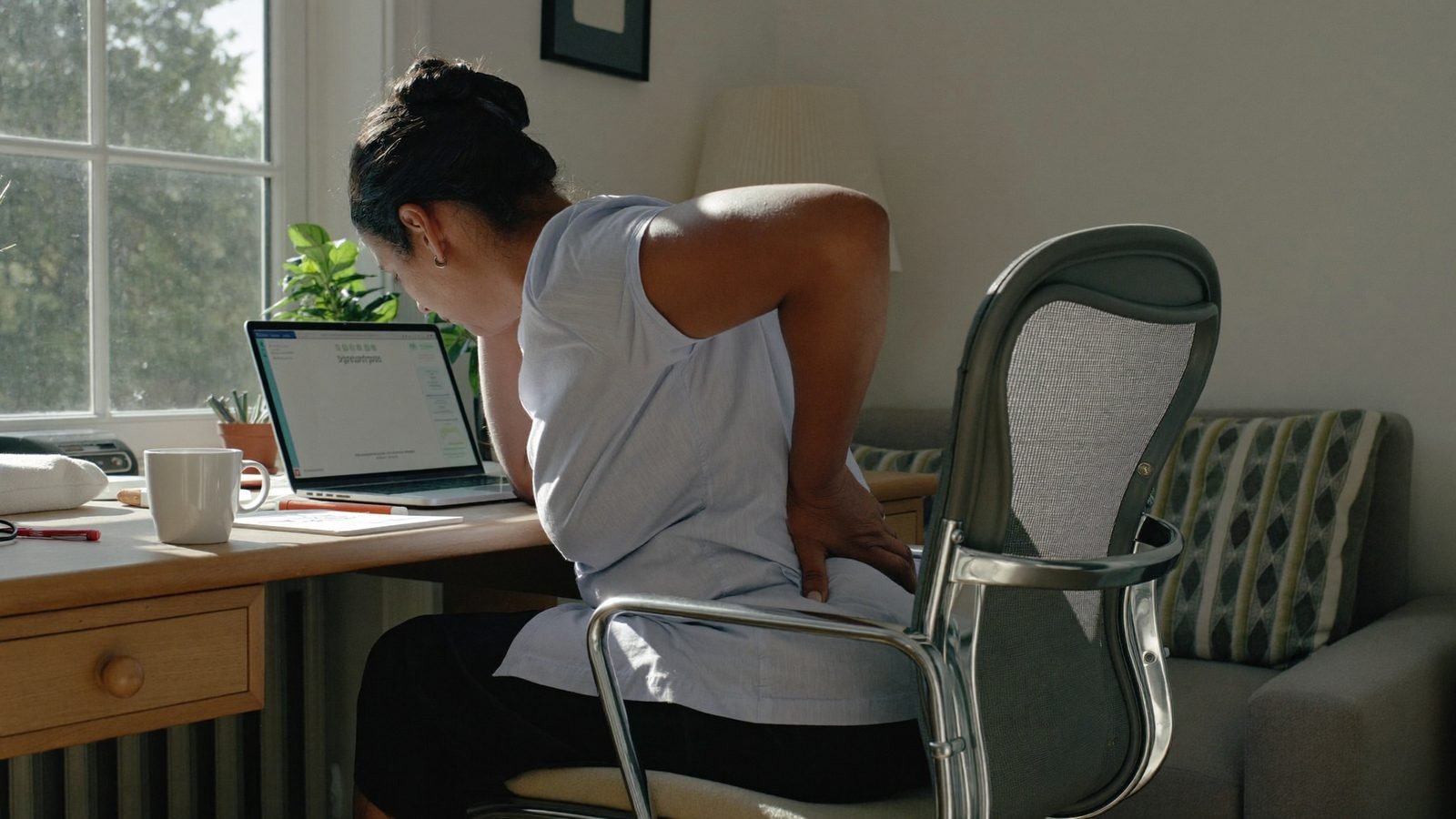
If your leg starts to burn halfway through the workday, your chair may be part of the story. Many people with sciatica notice it most after long hours of sitting, and a few small changes can ease the pressure while you deal with the cause.
Why sitting can make sciatica worse.
Sciatica describes a symptom. It means the sciatic nerve, or one of the nerve roots that form it, is irritated somewhere between your low back and your foot.
A National Library of Medicine review names a bulging or herniated disc in the low back, pressing on a nerve root, as the most common cause. Long stretches of sitting, especially slumped, often make this kind of leg pain worse. Slouching rounds your low back, and that can push on an irritated disc.
That is why many people feel the leg pain build as the workday goes on.
What sciatica usually feels like.
Most people describe pain that starts in the low back or buttock and runs down the back or side of one leg. It can burn, ache, or feel electric. Some people feel it only below the knee.
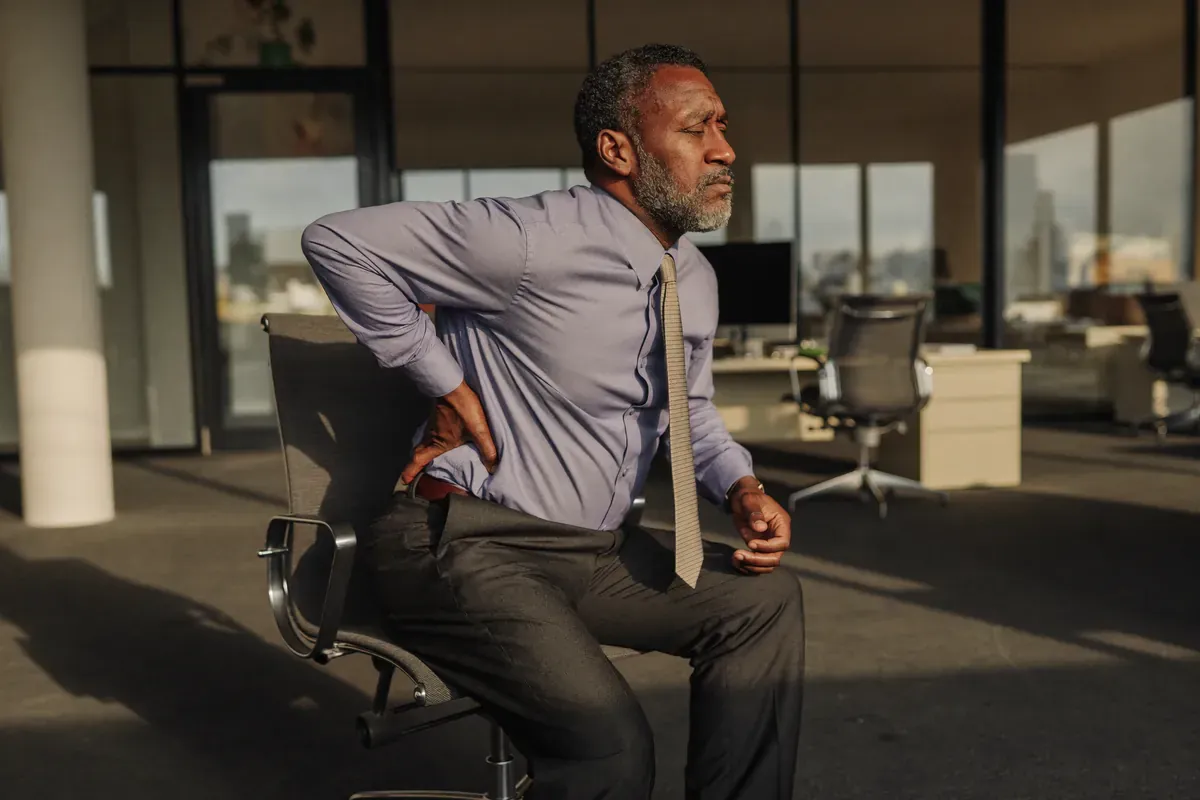
Other common signs:
- Pain that gets worse when you sit, cough, or sneeze.
- Tingling or pins and needles in the leg or foot.
- Numbness in one part of the leg or foot.
- Pain that often eases when you stand up, walk, or lie down.
Pain that never changes, no matter how you sit, stand, or lie down, can point to something else. That deserves an exam, not a guess.
Small changes at your desk that help.
You cannot quit your job to protect a disc. You can change how you sit.
- Get up and move often. A timer every 30 to 45 minutes helps. A short walk to the kitchen counts.
- Sit all the way back so the backrest holds your low back. A rolled towel at your belt line works if the chair has no support.
- Keep your hips level with your knees or a little higher.
- Keep both feet flat on the floor. Crossed legs twist the pelvis.
- Take your wallet out of your back pocket. Sitting on it tilts your pelvis all day.
- In the car, move the seat close enough that you never reach for the pedals.
None of these fix the cause. They stop the chair from adding to it while you treat the cause.
What to skip while it is flared up.
Some common moves make an irritated disc angrier.
Long toe-touch stretches and deep forward bends put the disc right back under load. Lifting something heavy from the floor with a twist is a classic way a mild flare turns into a bad week.
Skip long bed rest too. The NHS advises staying as active as you can and not sitting or lying down for long periods. Gentle walking on flat ground is a good place to start. If a movement sends pain further down your leg, stop it. If the pain pulls back up out of your leg toward your low back, that is often a good sign.
How chiropractic care helps sciatica.
Care starts with finding the source. Dr. Boss checks reflexes, strength, and feeling in both legs, because a pinched nerve root shows up there. He watches how you bend and which positions bring the leg pain on.

From there, the plan fits the cause. A low back joint that has stopped moving gets adjusted. Some patients with disc-related leg pain also try non-surgical spinal decompression. The research on it is still limited, and Dr. Boss will tell you straight whether it fits your case. Most plans add simple exercises you do at home, because those keep the gains between visits.
You can read more about how we treat it on our sciatica treatment page, or see what happens at your first visit.
When to get checked.
See a medical doctor right away if you have sciatica in both legs, numbness around your groin, or new trouble controlling your bladder or bowels. These are signs of a more serious back problem, according to the NHS.
See a medical doctor soon if your back or leg pain comes with weakness in one leg or foot that is getting worse (such as a foot that drags or slaps when you walk), a fever, unexplained weight loss, a history of cancer, pain that wakes you at night, or pain after a hard fall. MedlinePlus, from the U.S. National Library of Medicine, lists several of these as reasons to contact a provider right away.
For everything else, book an exam if the pain lasts more than a couple of weeks, keeps coming back, or keeps you from your normal day.
If you live or work near The Woodlands, Spring, Conroe, or Magnolia, you can book a visit online or call (281) 681-2677.
Frequently asked questions.
Can sitting cause sciatica?
Sitting alone rarely causes it. It can aggravate a disc or joint problem that is already there, and that is when the leg pain shows up.
Is a standing desk better for sciatica?
It can help, mostly because it makes changing position easy. Standing all day is not the goal. Switching between sitting, standing, and short walks works better than any one position.
How long does sciatica last?
A National Library of Medicine review says most cases get better within about 4 to 6 weeks. Some take a few months. Pain that lasts longer, keeps coming back, or comes with weakness deserves an exam.
Should I use heat or ice?
Either can ease pain for a short time. Use whichever feels better for 15 to 20 minutes at a time, with a cloth between your skin and the pack.
This page is general information, not medical advice. What is right for you depends on your exam. Dr. Boss will tell you straight whether we can help, and where to go if we cannot.