
Home / Blog / How a Chiropractor Helps With Sciatica Pain
From Dr. BossHow a Chiropractor Helps With Sciatica Pain.
If you have ever felt a sharp, burning pain shoot from your lower back down through your leg, you already know how much sciatica can take over your day. Here is what chiropractic care can actually do about it.
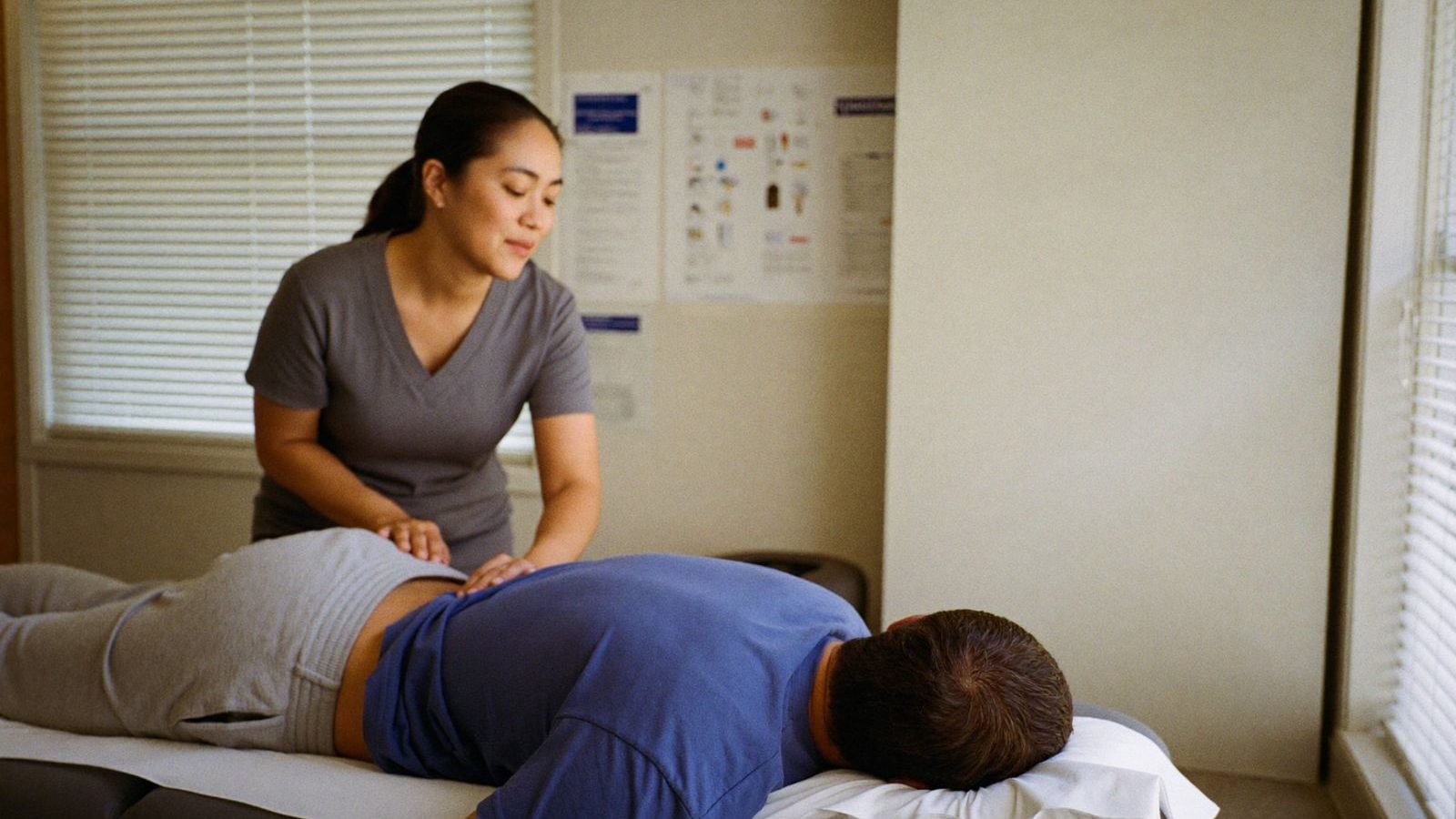
What a chiropractor does for sciatica pain
A chiropractor addresses sciatica by working on the spine and surrounding muscles to reduce pressure on the sciatic nerve. The goal is to relieve pain, restore movement, and help you stay out of pain long term.
Sciatica is nerve pain caused by irritation or compression of the sciatic nerve, the largest and longest nerve in the body, which runs from the base of the spine down through each leg to the foot. When that nerve is compressed or inflamed, it can cause debilitating pain, weakness, and tingling. The pain can feel like a deep ache or an electric shock shooting down one leg.
At Boss Chiropractic in The Woodlands, TX (Sterling Ridge), sciatica care has been part of the practice since 2001. The approach focuses on what is pressing on the nerve and how to relieve that pressure without surgery or medication.
What causes sciatica in the first place?
Sciatica starts when something presses on or irritates the sciatic nerve. A herniated disk is the most common cause, but spinal stenosis and degenerative disk disease can also trigger it.

The sciatic nerve originates in the lower spinal cord and carries both motor and sensory signals, meaning it controls movement and feeling throughout the lower limbs. When a disk, bone spur, or narrowed spinal canal presses on that nerve, pain and weakness can arise along the full nerve path, sometimes all the way to the toes.
Common triggers include:
- Herniated disks, the most frequent cause of sciatic nerve compression
- Spinal stenosis, a narrowing of the spinal canal
- Degenerative disk disease, wear on the cushions between vertebrae
- Pregnancy, which shifts the pelvis and can place new stress on the nerve
- Tight piriformis or hamstring muscles that press against the nerve
Knowing the cause matters because different triggers call for different adjustments and exercises. You can read more about the range of conditions that lead to sciatic pain on the back, neck and sciatica pain treatment page.
How spinal adjustments relieve sciatic nerve pressure
Chiropractic spinal adjustments correct the position of vertebrae in the spine. By doing that, they can reduce direct compression on the sciatic nerve and ease pain.
Spinal adjustments can relieve pressure on the sciatic nerve by correcting the placement of the spine. When a vertebra is out of position, it can pinch or irritate the nerve roots that feed into the sciatic nerve. Repositioning that vertebra removes the source of irritation.
This is different from masking pain with medication. The adjustment addresses a mechanical problem in the spine directly. For more on how this applies to sciatica, see the sciatica pain treatment page.
If you have been told you have a pinched nerve alongside sciatica, the same spinal work often applies. The pinched nerve treatment page covers what that care looks like.
The role of muscle work and stretching
Tight muscles, especially the piriformis and hamstrings, can press on the sciatic nerve. Stretching and releasing those muscles is a core part of chiropractic sciatica care.

The piriformis is a small muscle deep in the buttock that sits very close to the sciatic nerve. When it tightens, it can squeeze the nerve directly. The hamstrings run along the back of the thigh and, when tight, pull on the pelvis in ways that increase nerve tension. Relieving tightness in both muscle groups can decrease or eliminate sciatica symptoms.
A chiropractor may use manual soft-tissue techniques during your visit and give you specific stretches to do at home. Home exercises are a standard part of a sciatica treatment plan. Some chiropractors also provide nutrition and wellness guidance to support recovery. If your symptoms come on or worsen from sitting for long periods, the page on sciatica from sitting explains what tends to help.
Stretching at home between visits reinforces the work done in the office. The piriformis stretch, where you cross one ankle over the opposite knee and gently press the raised knee away from your body, is a common starting point. Hamstring stretches that keep the spine in a neutral position are also frequently recommended. These are not one-size-fits-all movements. The stretches that help one person may aggravate another depending on what is causing the compression, so following guided instruction matters.
Strengthening to protect the spine over time
Stronger core and postural muscles reduce the load on your spine, which lowers the chance that sciatica returns. Exercise guidance is often part of a chiropractic plan.

Adjustments and muscle work address what is happening right now. Strengthening work helps prevent the problem from coming back. When the muscles that support the spine are weak, more stress falls on the disks and joints, and compression on the sciatic nerve becomes more likely.
Core strengthening does not mean doing crunches. It means building the deeper muscles that wrap around the spine and hold it stable during everyday movement. Exercises done flat on your back, on your hands and knees, or standing upright can all target these muscles without putting extra strain on an already irritated nerve.
Postural muscles also play a role. If you spend long hours seated, the muscles that hold your pelvis level and your lower back in a healthy curve tend to weaken over time. That weakness shifts load to the disks and joints in your lower spine. Strengthening those muscles takes some of that load off.
A chiropractor can identify which exercises fit your situation and show you how to do them without making symptoms worse. Core and postural strengthening is a recognized tool in sciatica treatment because it reduces excess load on the spine.
If back pain is part of your picture alongside sciatica, the back pain treatment page covers what chiropractic care looks like for that as well.
What to expect at your first visit
Your first visit will focus on understanding where your pain is coming from and how severe the compression is. From that starting point, a care plan is built around your specific situation.
You will describe your symptoms, including where the pain travels, what makes it better or worse, and how long you have had it. That history helps identify the likely cause. A physical assessment looks at how your spine moves, where tenderness is located, and whether any muscle groups are tight or weak.
From there, a plan takes shape. Some people start with adjustments right away. Others may need muscle work first to reduce tension before the spine can be moved comfortably. Home exercises are usually introduced early so that progress continues between visits.
The pace of care depends on how your body responds. Progress is reassessed regularly so the plan can be updated as your symptoms change. The goal is not to keep you coming in indefinitely. It is to get you to a point where your spine is stable and the nerve is no longer under pressure.
Who is chiropractic sciatica care right for?
Chiropractic care for sciatica is appropriate for most adults whose pain has a mechanical cause. It is also used for children and pregnant patients when sciatica or related nerve pain is present.
Adults in The Woodlands, Spring, Conroe, Magnolia, Tomball, Shenandoah, and Oak Ridge North who are dealing with radiating leg pain, numbness, or tingling are candidates for this kind of care. The same applies if your pain is mostly in the lower back and buttock rather than travelling all the way down the leg.
Pregnant patients are seen at Boss Chiropractic. Pregnancy shifts the center of gravity and can place new pressure on the sciatic nerve as the pelvis changes position. Techniques used during pregnancy are adapted to what is safe and comfortable at each stage.
Children with back or nerve pain are also seen. Sciatica is less common in children, but nerve-related pain from spinal issues does occur, and chiropractic care can be adapted to younger patients.
People who have tried rest and over-the-counter pain relief without lasting results often find that addressing the mechanical cause of compression produces better outcomes than waiting for symptoms to settle on their own.
When to call your doctor right away
Some sciatica symptoms point to a more serious problem. Call your doctor or Boss Chiropractic right away if you notice loss of bladder or bowel control, or sudden severe weakness in both legs.
Most sciatica is mechanical and responds to conservative care. But certain symptoms suggest a problem affecting the spinal cord or nerve roots at multiple levels at once. These include:
- Loss of bladder or bowel control
- Sudden, severe weakness in both legs
- Sciatica that follows a significant injury or fall
- Pain that is rapidly worsening with no position giving relief
If you have any of those symptoms, call your doctor or call Boss Chiropractic at (281) 681-2677 so you can be directed to the right level of care quickly. For typical sciatica, where pain runs down one leg with or without numbness or tingling, chiropractic care is a reasonable first step.
Frequently asked questions
How long does chiropractic care for sciatica take to work?
There is no universal timeline. How quickly you feel relief depends on what is causing the compression, how long you have had it, and how your body responds to adjustments.
Some people notice a change after the first few visits. Others take longer, especially if the underlying cause is degenerative disk disease or spinal stenosis. Progress is reassessed regularly and the plan is updated as needed.
Can chiropractic care help sciatica caused by a herniated disk?
Yes. A herniated disk is the most common cause of sciatic nerve compression, and spinal adjustments are designed to relieve that kind of pressure on the nerve.
Adjustments correct vertebral position and reduce the load the herniated disk places on the nerve. Muscle work and exercises support that process.
Is chiropractic care safe for sciatica during pregnancy?
Chiropractic care is used for pregnant patients. Boss Chiropractic in The Woodlands, TX sees pregnant patients and can adapt techniques to what is safe and comfortable during pregnancy.
Pregnancy can shift the pelvis and place new pressure on the sciatic nerve. Gentle adjustments and positioning during the visit account for the changes in the body at that stage.
Will I need to do exercises at home?
Home exercises are often part of a sciatica plan. A chiropractor may recommend specific stretches and strengthening work to do between visits.
Stretching the piriformis and hamstrings and building core strength between appointments reinforces what happens in the office and can speed recovery.
Can sciatica come back after chiropractic care?
Sciatica can return, especially if the underlying cause, such as degenerative disk disease or poor posture habits, is not addressed. Strengthening and lifestyle changes help reduce that risk.
Postural awareness, regular movement, and core work are the main tools for keeping sciatic pain from coming back.
Does Boss Chiropractic accept insurance for sciatica care?
Yes. Boss Chiropractic accepts most insurance plans, self-pay, and checks.
Call (281) 681-2677 to ask about your specific plan before your first visit. The office is at 6700 Woodlands Pkwy, Ste. 200, The Woodlands, TX 77382.
What are Boss Chiropractic's office hours?
The office is open Monday, Wednesday, and Thursday from 8 to 1 and 3 to 6, and Tuesday and Friday from 8 to 1. The office is closed Saturday and Sunday.
If you are planning a visit around a holiday, the office is closed November 26 and 27, 2026, December 24 and 25, 2026, and December 31, 2026 through January 1, 2027.
Is chiropractic care for sciatica an alternative to surgery?
Chiropractic care is a conservative, non-surgical option for sciatica. It is often tried before surgery is considered, though it is not appropriate for every case.
People who receive chiropractic spinal adjustments for spinal pain tend to be prescribed opioids less often than those receiving usual medical care. For serious structural problems, a chiropractor will refer you to the right specialist.
If sciatica is affecting your daily life, the next step is a visit. Book an appointment at Boss Chiropractic to get a clear picture of what is pressing on your nerve and what can be done about it.
This page is general information, not medical advice. What is right for you depends on your exam. Dr. Boss will tell you straight whether we can help, and where to go if we cannot.