
Home / Blog / Herniated disc vs bulging disc: what the difference means for you
From Dr. BossHerniated disc vs bulging disc: what the difference means for you.
Your MRI report says one word and a friend's says another. Here is what bulging and herniated really mean, why many bulges cause no pain, and when to get help.

A bulging disc pushes out past its normal edge. A herniated disc has a crack that lets some of its soft center push out. Both words show up on a lot of MRI reports, and many people use them as if they mean the same thing. Knowing the difference can take some of the fear out of a scan report.
How a healthy disc is built.
Between the bones of your spine sit soft, round cushions called discs. They work like shock absorbers when you walk, run, or jump.
Each disc has two parts. The outer ring is tough and flexible. The center is soft and jelly-like. The American Academy of Orthopaedic Surgeons (AAOS) explains that as we age, discs hold less water, grow less flexible, and become more likely to tear or bulge.
What a bulging disc is.
With a bulging disc, the tough outer ring pushes out past its normal edge, often along a wide part of the disc. Mayo Clinic explains that discs show wear and tear with age, and those changes can make the outer layer bulge.

Bulges are very common in people who feel fine. A 2015 review of imaging studies in the American Journal of Neuroradiology looked at people with no back pain. It found disc bulges in many of them at every age, and they showed up more often the older people were.
Mayo Clinic compares a bulging disc to a burger that is a little too big for its bun. The bulge often runs along a large part of the disc's edge, and only the tough outer layer is involved.
What a herniated disc is.
A herniated disc has a crack in its tough outer ring that lets some of the soft center push out.
That matters because of where the material can go. It can press on a nearby nerve root, and it can release chemicals that irritate the nerve, according to the AAOS. Mayo Clinic notes that a herniated disc is more likely to cause pain than a bulging one.
People often call this a ruptured or slipped disc. Mayo Clinic points out that the whole disc does not really rupture or slip. Only the small cracked area is affected.
Wear and tear with age is the most common cause, according to the AAOS. A fall or other injury can also cause it. Lifting the wrong way, carrying extra weight, hard physical work, driving a lot, not moving much, and smoking can all raise the risk.
What each one can feel like.
A bulging disc often causes no symptoms at all. A herniated disc can cause trouble, but not always. The NHS notes that some slipped discs cause no symptoms.

When a disc in the low back does press on a nerve, common signs include:
- Low back pain, often the first sign. It may ease after a few days.
- Sharp, shooting pain from the buttock down the back of one leg, called sciatica.
- Numbness or tingling in the leg or foot.
- Weakness in the leg or foot.
The NHS also lists neck pain, and numbness or tingling in the shoulders, arms, or hands, as possible signs. If leg pain is your main problem, our post on sciatica from sitting covers what helps at your desk.
What your MRI report does and does not tell you.
Words like bulge, protrusion, and herniation describe the shape of a disc on the scan. On their own, they do not tell you whether that disc is the cause of your pain.
The same imaging review found that signs of disc wear show up in a large share of people with no pain, and the share grows with age. So a scan finding has to be matched to your symptoms and your exam.
That is why your symptoms and an exam usually come first. The NHS says a slipped disc is usually found from your symptoms, sometimes with a physical exam, and an MRI scan may be needed if things do not get better. When a scan is needed, the AAOS calls MRI the preferred test, because it shows soft tissue like discs and nerves clearly.
How a herniated disc usually heals.
The news here is mostly good. The AAOS says most herniated discs slowly improve over days to weeks, and most people are free of symptoms by 3 to 4 months. Some people have flare-ups along the way.
In many cases, the pushed-out disc material shrinks over time and is absorbed by the body. Only a small share of people with a herniated disc in the low back need surgery.
Simple care usually comes first. The AAOS lists anti-inflammatory medicines such as ibuprofen, and physical therapy exercises that make the back and stomach muscles stronger. The NHS says that starting gentle exercise as soon as you can is linked to a faster recovery. Ask a pharmacist or your doctor before you start any medicine.
What helps while it heals:
- Stay as active as you can. The NHS recommends gentle activity like walking or swimming, as long as it does not make the pain worse.
- Keep bed rest short. The AAOS suggests one or two days at most.
- Take breaks from long stretches of sitting.
- Bend and lift slowly, and do not twist while you lift.
To lower the chance of back trouble later, the NHS suggests staying active with regular exercise, lifting heavy things with a safe technique, and not smoking.
How chiropractic care fits in.
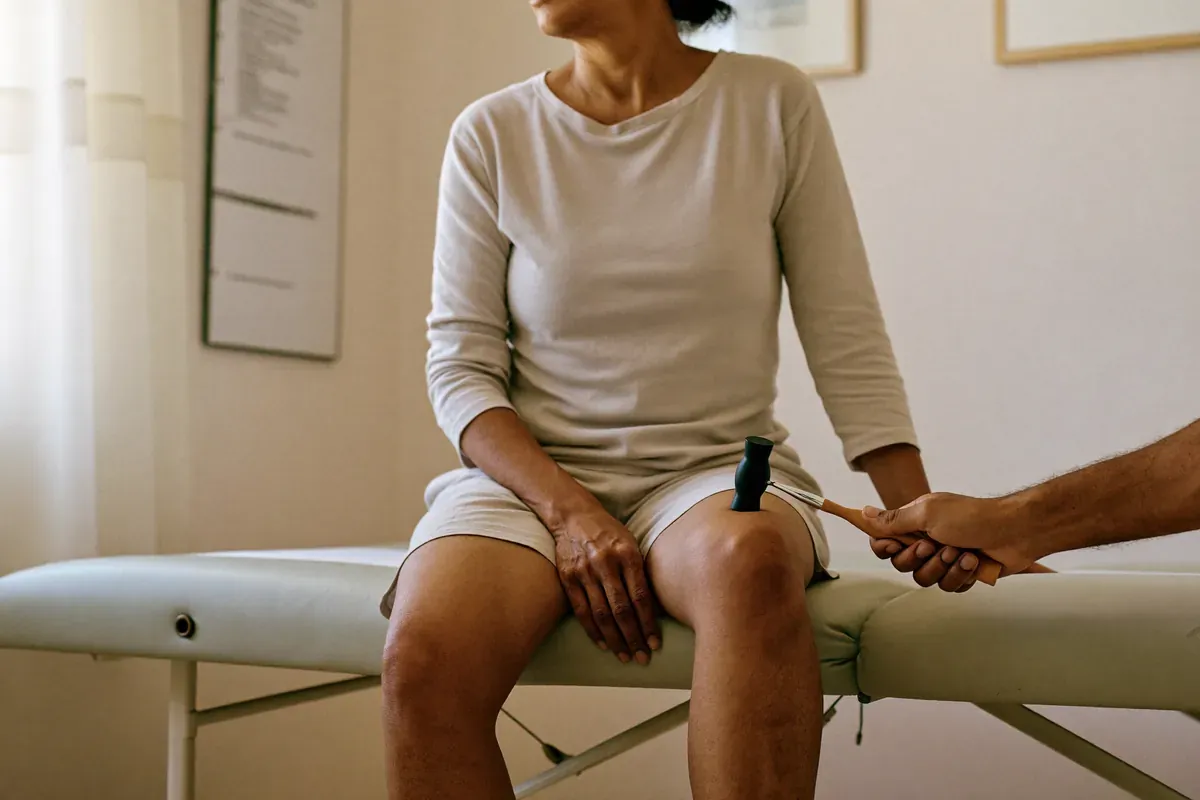
Care starts with an exam. Dr. Boss checks your reflexes, strength, and feeling in your legs or arms, and watches how you move. A straight leg raise, where your leg is lifted while you lie on your back, can point to a herniated disc in the low back.
He can use a 3D spine model to show you what he found. It is a teaching model, not a scan of you.
From there, the plan fits what he finds. A stiff joint in the low back may get adjusted. The NHS notes there is some evidence that hands-on therapies can help ease lower back pain. Some people with disc-related pain also try non-surgical spinal decompression. The research on it is still limited, and Dr. Boss will tell you straight whether it fits your case. You can read more about our herniated disc treatment or your first visit.
When to get checked.
Get medical help right away if back pain comes with numbness around your bottom or genitals, trouble peeing, loss of control of your bladder or bowels, or loss of feeling in one or both legs. The same goes for back pain after a serious accident, like a car crash. The NHS lists these as emergency signs and says not to drive yourself to get help.
If weakness in a leg or foot is getting worse, see a medical doctor the same day. See one soon if the pain is worse at night, or comes with a fever, chills, swelling in your back, or weight loss you cannot explain.
See your doctor or book an exam if the pain is not getting better after a few weeks, painkillers are not helping, or it keeps coming back. If you live or work near The Woodlands, Spring, Conroe, or Magnolia, you can book a visit online or call (281) 681-2677.
Frequently asked questions.
Is a bulging disc the same as a herniated disc?
No. In a bulging disc, the outer layer pushes out past its normal edge. In a herniated disc, a crack in the outer layer lets some of the soft center push through. A herniated disc is more likely to press on a nerve and cause pain.
Is a slipped disc the same as a herniated disc?
Yes. The NHS uses slipped disc, prolapsed disc, and herniated disc as names for the same problem, when the soft cushion between two spinal bones pushes out and can press on nerves.
Can you have a bulging disc and no pain?
Yes, and it is very common. The 2015 imaging review found disc bulges in many people with no back pain, more often as they got older. Mayo Clinic adds that some people only learn they have one from a scan done for another reason.
How long does a herniated disc take to heal?
Most herniated discs slowly improve over days to weeks. The AAOS says most people are free of symptoms by 3 to 4 months, though some have flare-ups along the way.
Does a herniated disc always need surgery?
No. The AAOS says only a small share of people with a herniated disc in the low back need surgery. It is usually for pain that does not improve with other care, or for weakness or trouble walking. Loss of bladder or bowel control is an emergency, so get medical help right away.
Should I stay in bed with a herniated disc?
Usually not for long. The AAOS suggests one or two days of bed rest at most, and the NHS advises staying active with gentle movement like walking, as long as it does not make the pain worse.
This page is general information, not medical advice. What is right for you depends on your exam. Dr. Boss will tell you straight whether we can help, and where to go if we cannot.